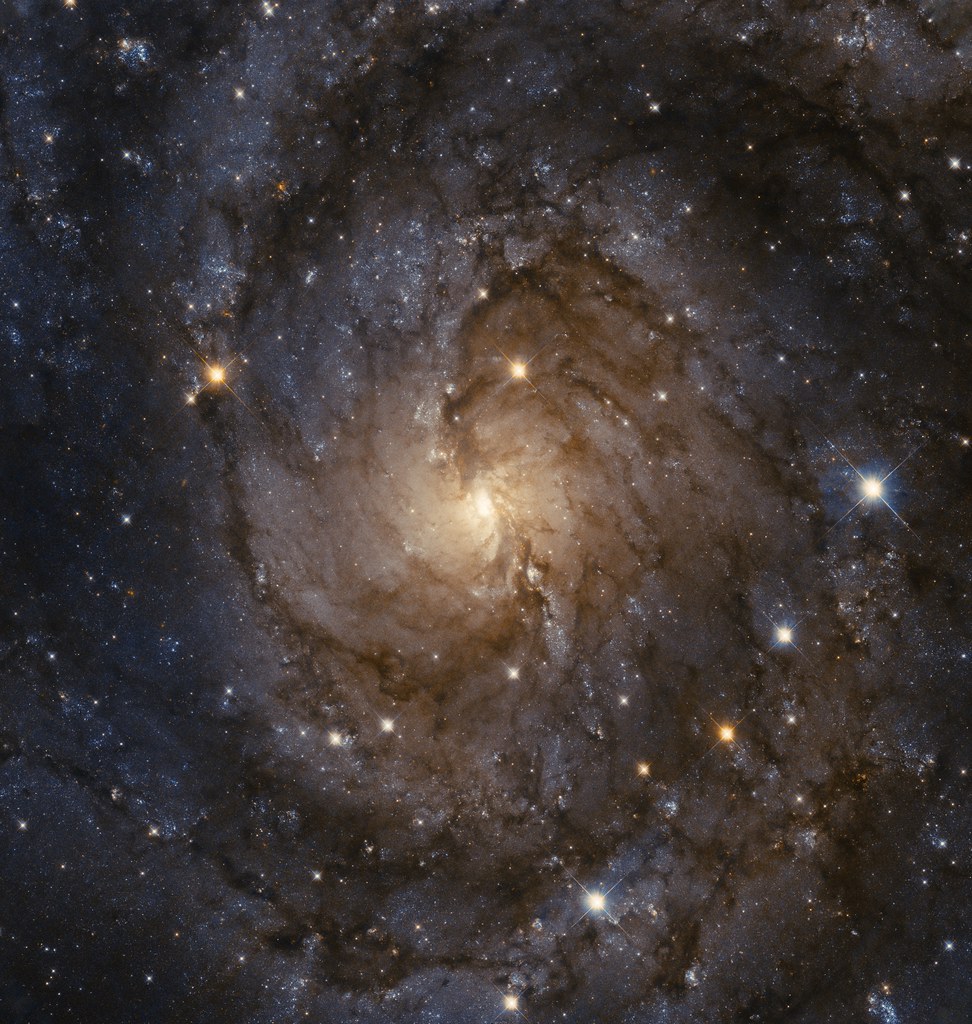
gas giant formation has been captured in unprecedented detail by astronomers, shedding light on the complex processes involved in creating these massive planets.
Understanding Gas Giants
Gas giants, the colossal planets primarily composed of hydrogen and helium, have long fascinated astronomers. Understanding gas giant formation is essential for unraveling the mysteries of our universe and the origins of planetary systems.
Recent advancements in observational technology have provided unprecedented insights into the processes that lead to the birth of these massive celestial bodies. Key findings include:
- Protoplanetary Disks: Gas giants typically form in disks of gas and dust surrounding young stars, where material accumulates over time.
- Core Accretion Theory: This theory suggests that gas giants begin as solid cores that attract surrounding gas, growing in size over millions of years.
- Gravitational Instability: Another model proposes that gas giants can form rapidly through the gravitational collapse of gas in dense regions of the protoplanetary disk.
These insights not only enhance our understanding of gas giant formation but also provide a broader context for the evolution of planetary systems across the cosmos.
The Role of Telescopes in Astronomy
The advancement of telescope technology has significantly enhanced our understanding of gas giant formation. Modern telescopes enable astronomers to observe distant celestial objects with remarkable clarity, revealing the intricate processes that lead to the creation of these enormous planets.
Key developments in telescope design include:
- Adaptive Optics: This technology corrects distortions caused by Earth’s atmosphere, providing clearer images of gas giants in formation.
- Infrared Observations: Telescopes that detect infrared light can penetrate dust clouds, allowing for the observation of protoplanetary disks where gas giants are born.
- Space-Based Telescopes: Instruments like the Hubble Space Telescope have provided unprecedented views of gas giant formation, free from atmospheric interference.
These advancements allow scientists to capture real-time images of gas giant formation, offering insights into their development and the conditions necessary for their birth.
Recent Discoveries in Planet Formation
Recent discoveries in planet formation have provided astronomers with groundbreaking insights into the process of gas giant formation. A recent study revealed that the early stages of gas giants can be observed in real-time, offering a unique glimpse into their development.
Using advanced telescopes, researchers have detected the accumulation of gas and dust around young stars, which are the building blocks for these massive planets. This evidence aligns with theories suggesting that gas giants form through the gravitational collapse of material in protoplanetary disks.
Key findings from these observations include:
- The identification of protoplanets: Astronomers have located structures that indicate the presence of forming gas giants.
- Tracking gas accretion: The study has shown how gas is drawn into these growing planets.
- Understanding formation timescales: New data suggests that gas giants can form more rapidly than previously believed.
These discoveries enhance our understanding of how gas giants come into existence and their role in the broader context of planetary systems.
How Gas Giants Differ from Rocky Planets
Gas giants and rocky planets differ fundamentally in their composition and formation processes. While rocky planets, such as Earth and Mars, are primarily composed of silicate and metal materials, gas giants like Jupiter and Saturn are largely made up of hydrogen and helium. This distinction is crucial in understanding gas giant formation.
One key difference lies in their size and mass. Gas giants are significantly larger, with thick atmospheres that can contain complex weather systems, unlike the thin atmospheres of rocky planets. Additionally, gas giants possess numerous moons and rings, which are often remnants of their formation or captured celestial bodies.
Another aspect is the distance from their star. Typically, gas giants are found further from their host stars, allowing them to gather more gas during their formation phase. This leads to a higher accumulation of materials, resulting in their massive size and gaseous nature.
Overall, understanding these differences helps astronomers gain deeper insights into the processes behind gas giant formation.
The Importance of Studying Planetary Systems
The study of planetary systems, particularly the formation of gas giants, is crucial for understanding the evolution of our universe. By examining the processes that lead to the creation of these massive planets, astronomers can gain insights into the dynamics of star formation and the development of planetary atmospheres.
Moreover, exploring gas giant formation helps scientists to:
- Identify the conditions necessary for the birth of planets, enhancing our knowledge of the solar system’s origins.
- Reveal the diversity of planetary systems, which can differ greatly from our own, shedding light on how common gas giants might be in the universe.
- Improve models of planet formation, allowing for predictions about unobserved systems based on empirical data.
- Challenge existing theories and inspire new research directions in astrophysics.
As new discoveries unfold, the importance of studying these celestial phenomena continues to grow, offering a deeper appreciation for the complexity of the cosmos.
Astronomical Techniques for Observing Formation
Astronomical techniques for observing gas giant formation have advanced significantly, enabling scientists to capture detailed insights into this complex process. One of the most prominent methods involves high-resolution imaging, which allows researchers to visualize protoplanetary disks where gas giants are born. By using ground-based observatories equipped with adaptive optics, astronomers can minimize atmospheric distortion and obtain clearer images of young star systems.
Additionally, space telescopes like the James Webb Space Telescope have expanded our observational capabilities. These instruments can detect the infrared signatures of gas and dust, revealing the conditions under which gas giants form.
Other techniques include spectroscopy, which analyzes light from distant stars to identify chemical compositions and temperature gradients in forming planetary systems. By employing these methods, astronomers are piecing together the puzzle of gas giant formation, providing a deeper understanding of how these massive planets emerge and evolve in their celestial neighborhoods.
Future of Gas Giant Research
The future of gas giant research holds exciting potential as advancements in technology and observational techniques continue to evolve. As astronomers capture unprecedented views of gas giant formation in action, new questions arise about the processes involved in creating these massive planets.
Future studies are likely to focus on several key areas:
- Enhanced Imaging Techniques: Improved telescopes and imaging methods will allow scientists to observe gas giants during various stages of formation, providing deeper insights into their characteristics.
- Computer Simulations: Advances in computational models will enable researchers to simulate the conditions under which gas giants form, enhancing our understanding of their origins.
- Exoplanetary Systems: Investigating gas giants in distant planetary systems will help us understand how common these formations are across the universe.
With a focus on gas giant formation, the next decade of research promises to broaden our understanding of planetary development and the complexities involved in creating these colossal celestial bodies.
Implications for Astrobiology
The formation of gas giants holds significant implications for the field of astrobiology. Understanding gas giant formation not only sheds light on the processes that lead to the creation of these massive planets but also informs us about the potential habitability of surrounding environments.
Key insights include:
- Planetary Atmospheres: The study of gas giants reveals how atmospheric conditions evolve, which can influence the potential for life on nearby rocky planets.
- Orbital Dynamics: Gas giants can affect the orbits of smaller planets, thereby shaping the architecture of entire planetary systems.
- Chemical Composition: The formation processes of gas giants can provide clues about the availability of essential elements for life in their vicinity.
- Migration Patterns: Understanding how gas giants migrate within their systems can lead to insights on the stability of habitable zones around stars.
As astronomers capture unprecedented views of gas giant formation, these findings may redefine our search for extraterrestrial life.
By geckzilla via Openverse
Read the original
Related stories
Curbs on Junk Food Sales: The Smart Move for Schools · Jazz overcharging claim: Is it the worst audit result ever? · Water Near Supermassive Black Hole: Is It Worth Exploring?